IAD 241 Human Environments — Project 02
A pediatric primary care clinic designed around the choreography of a historic train hall — transforming infection control into an intuitive, child-centered journey.
Dual-Track Care.
The choreography of a historic train hall — translated into a calm, legible journey for young patients.
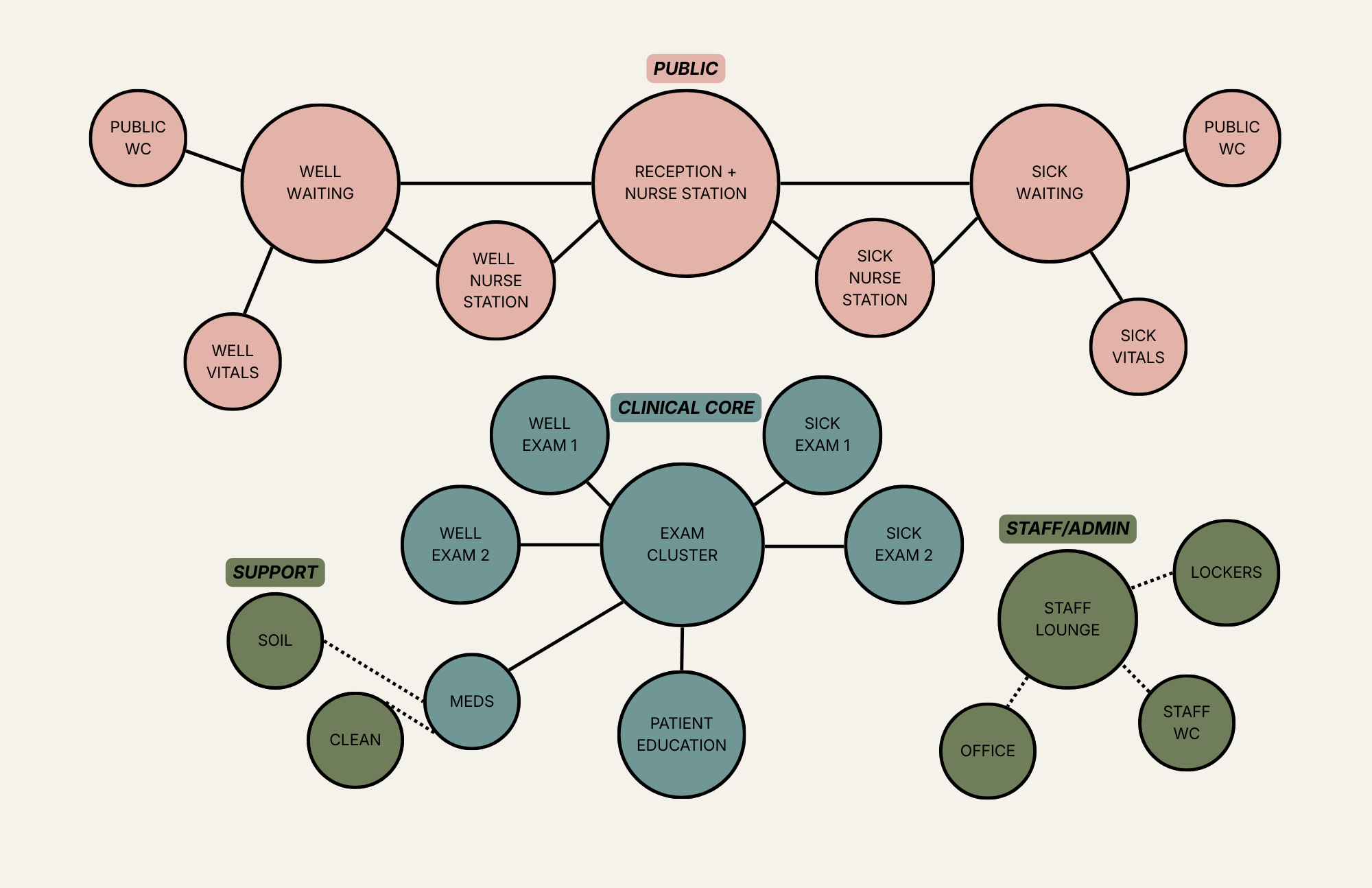
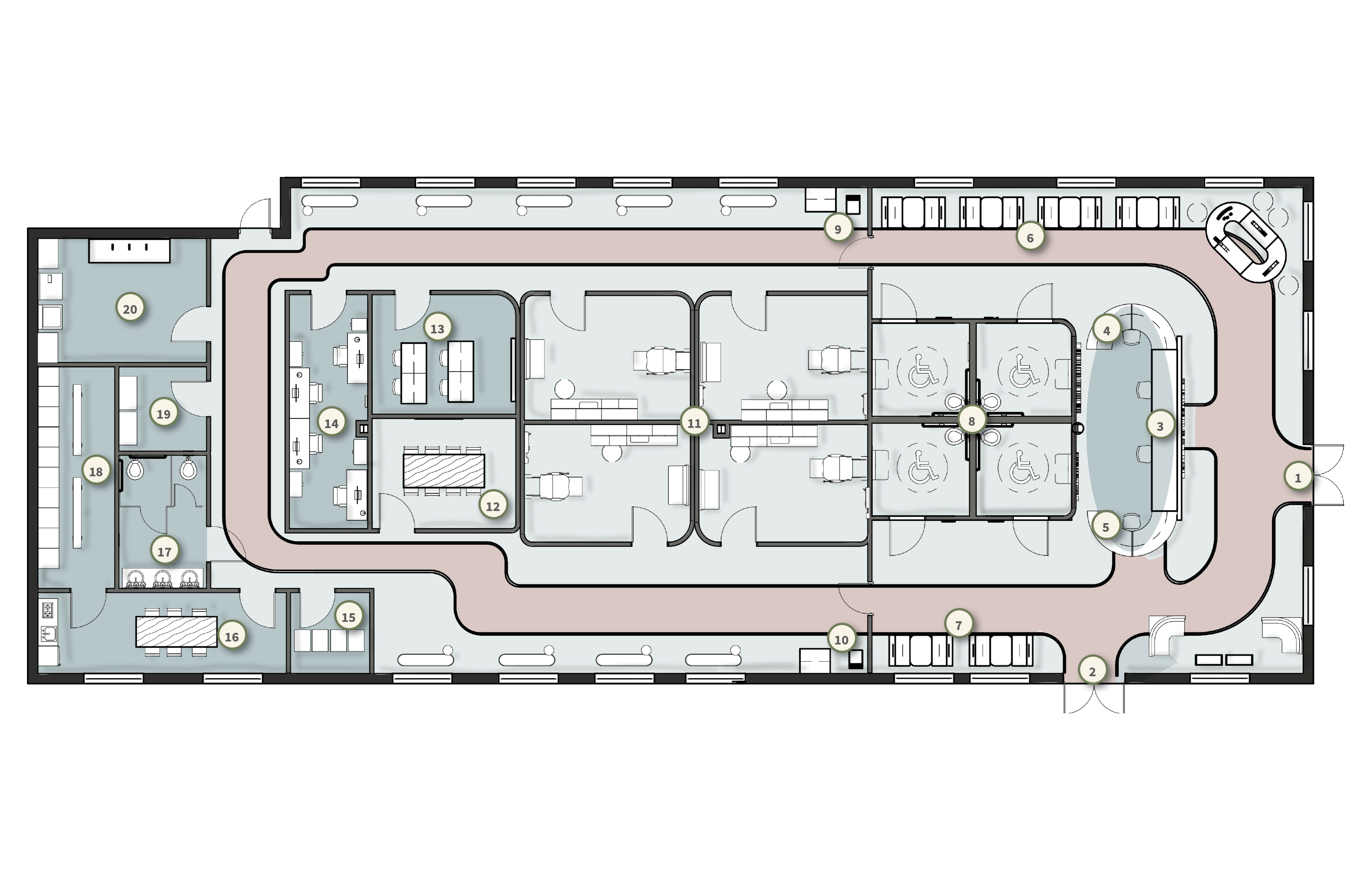
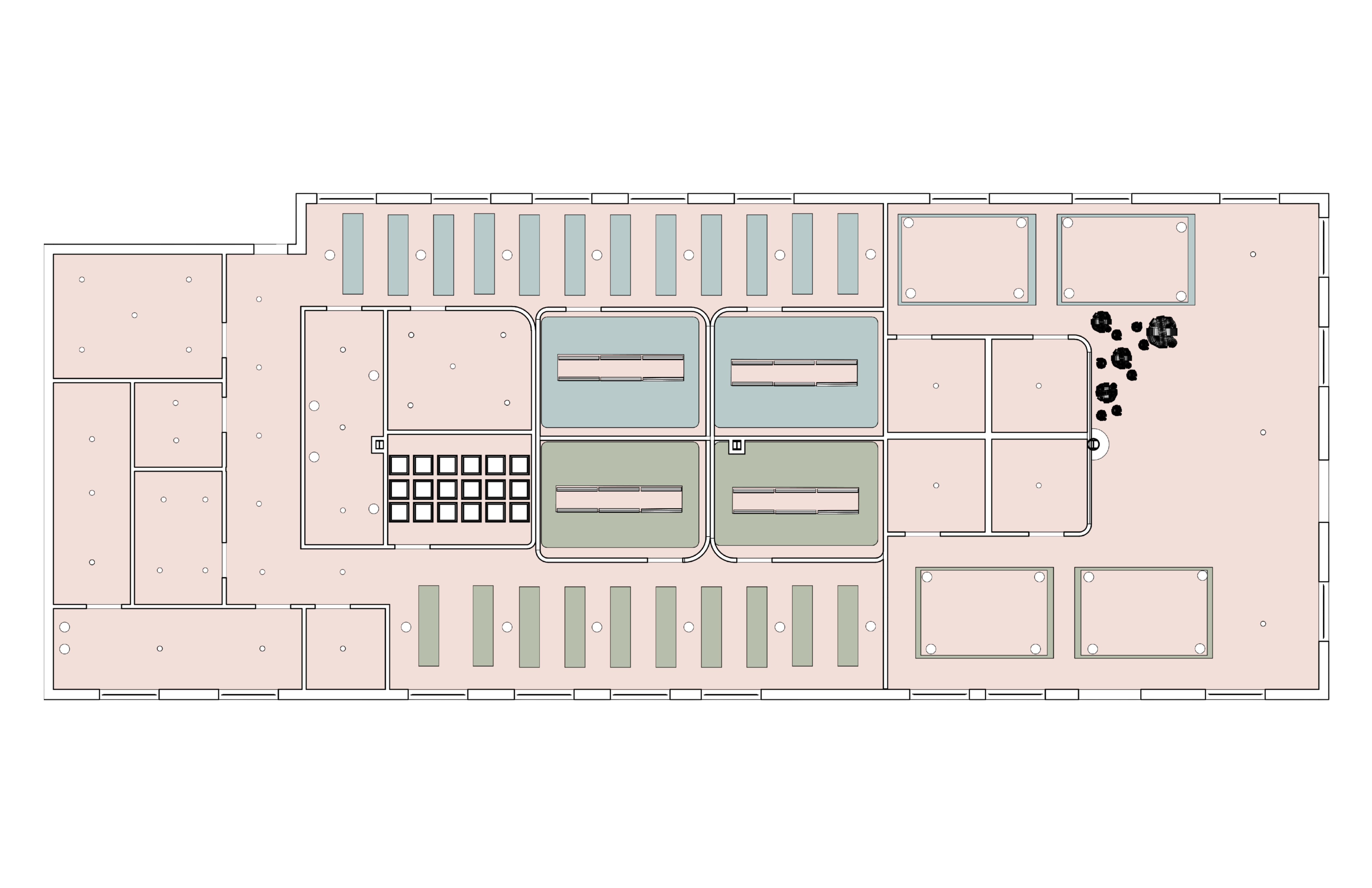
Two parallel "tracks" guide well and sick visitors along separate yet visually connected routes, converging at a central nurse hub that acts as both ticket counter and reassuring landmark. The dual-entry system is the primary wayfinding strategy — each patient enters through a dedicated sick or well corridor, reducing cross-contamination while eliminating the clinical anxiety of a traditional medical facility.
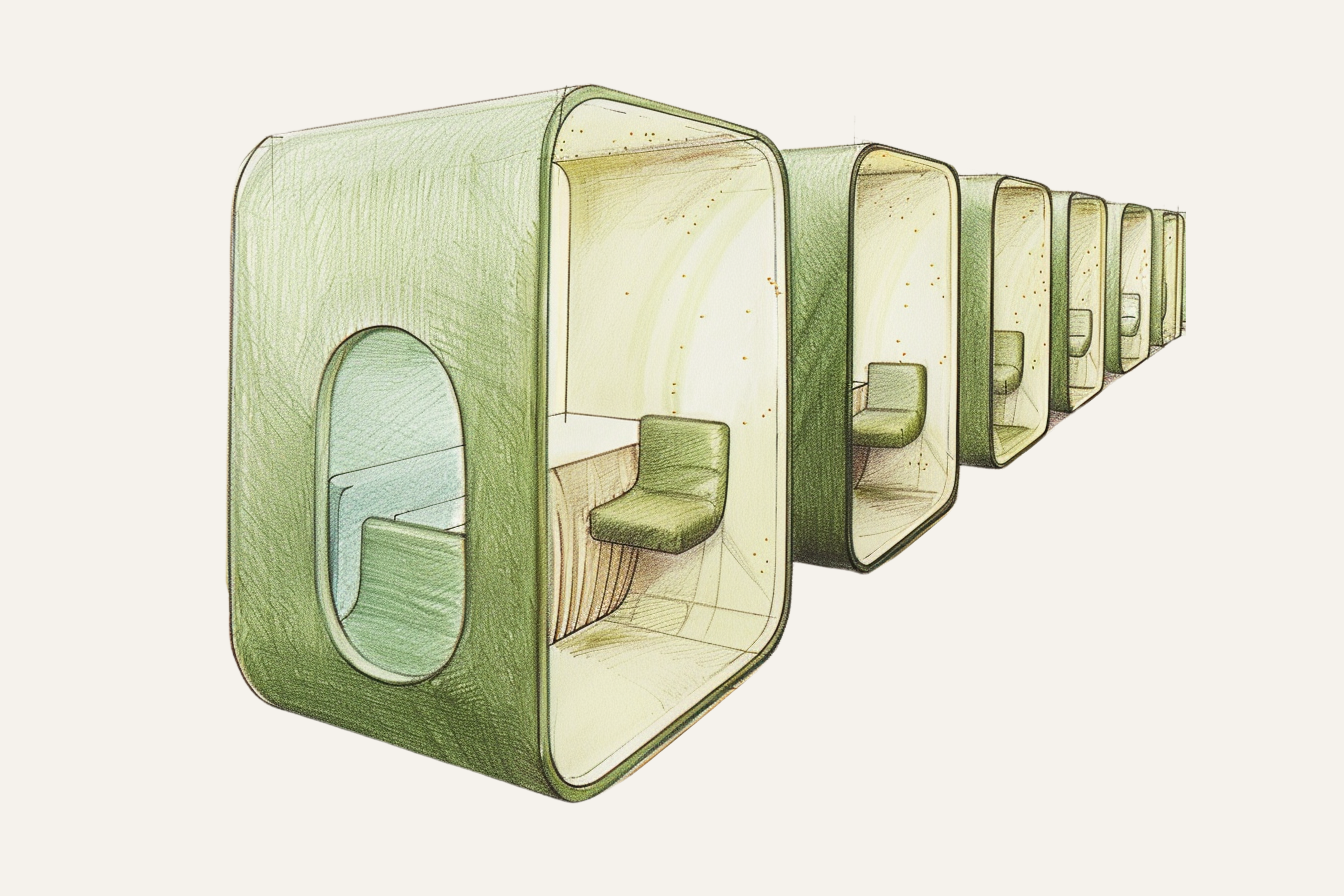
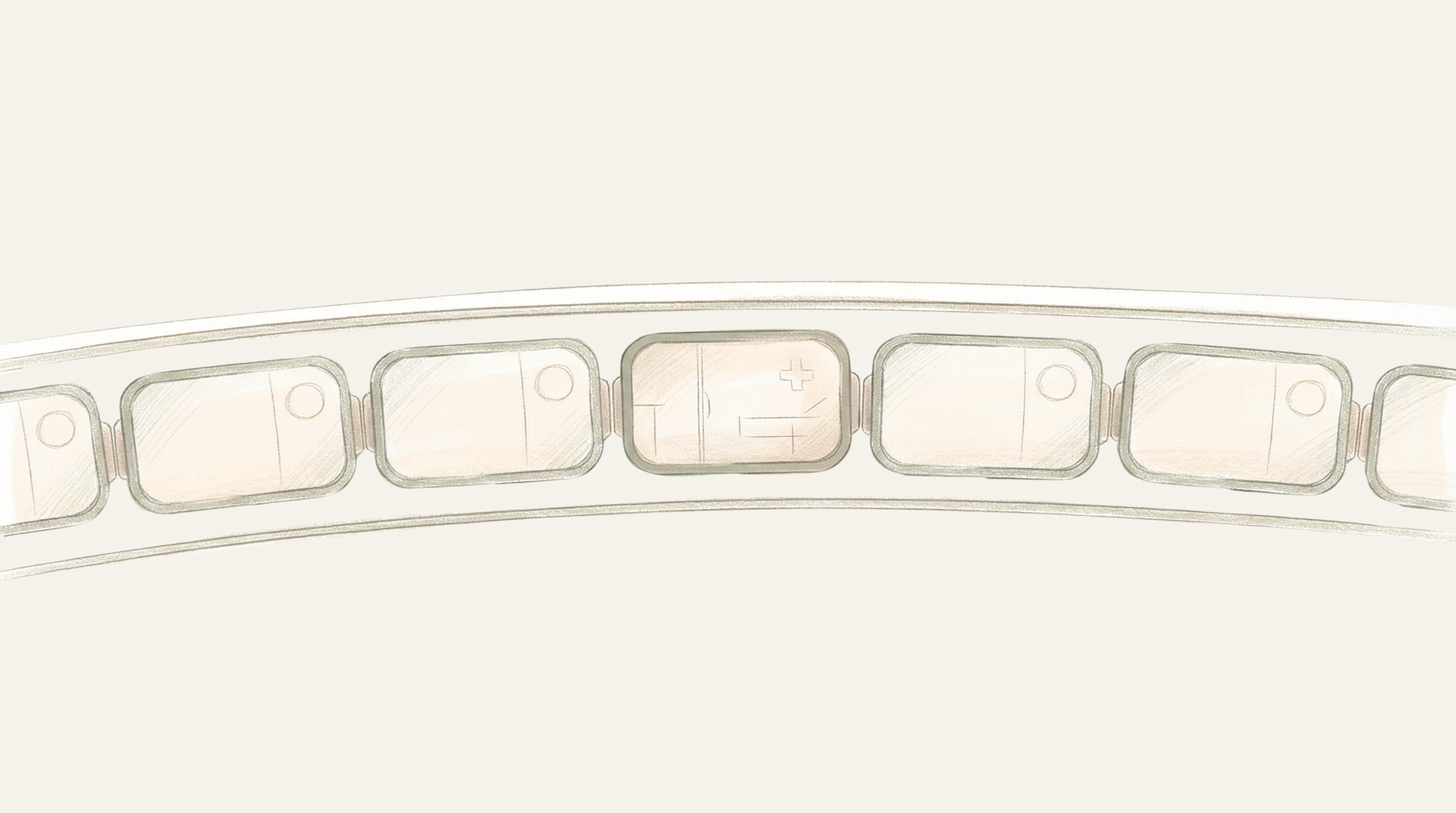
Exam rooms become individual cars with landscape "windows," where soft, desaturated surfaces and controlled lighting temper the excitement of travel into a sense of safety. The arched detailing drawn from Beaux-Arts train stations transforms a functional healthcare environment into a space children can read intuitively — movement, rhythm, and arrival as design language.
The result is a clinic that uses wonder to reduce fear. Pediatric wayfinding is not signage — it is atmosphere, sequence, and spatial identity working in unison.
Separate sick and well entries and corridors eliminate cross-contamination pathways while maintaining visual connection through the central nurse hub — turning infection control into intuitive spatial logic.
Infection ControlArched forms, landscape "windows," and a train-hall aesthetic give children a spatial narrative to follow. Movement through the clinic becomes a journey, not a transit through anxiety.
Pediatric DesignFurniture, counter heights, sightlines, and spatial sequencing are calibrated across a 0–18 age range — from toddler scale to adolescent proportion — ensuring equitable access and comfort for all users.
Accessibility · ADA
Each exam room is conceived as a self-contained carriage: a rounded, soft-cornered shell with an oval porthole window, a single upholstered seat, and a barrel-vaulted ceiling overhead. The carriage vocabulary transforms a clinically anxious space into something a child can read as familiar — a seat on a train, not a table in a procedure room.
Well patients enter through a dedicated entry that opens into the well waiting area — light, spacious, and oriented toward natural light. The nurse station anchors orientation, acting as the "ticket counter" landmark. Barrel vault skylights and ribbon cloud pendants create a sense of arrival that is calming rather than clinical.
Sick patients enter through a separate entry routed along the building perimeter — contained yet dignified. The corridor uses softer lighting, acoustic coffer panels for sensory sensitivity, and the same material vocabulary as the well track to maintain visual continuity without compromising infection control protocols.
The ceiling plane reinforces the dual-track wayfinding strategy through deliberate fixture placement — barrel vault skylights mark the main corridors, ribbon cloud pendants designate zones of pause and waiting, and recessed linear LEDs define the clinical workflow areas.
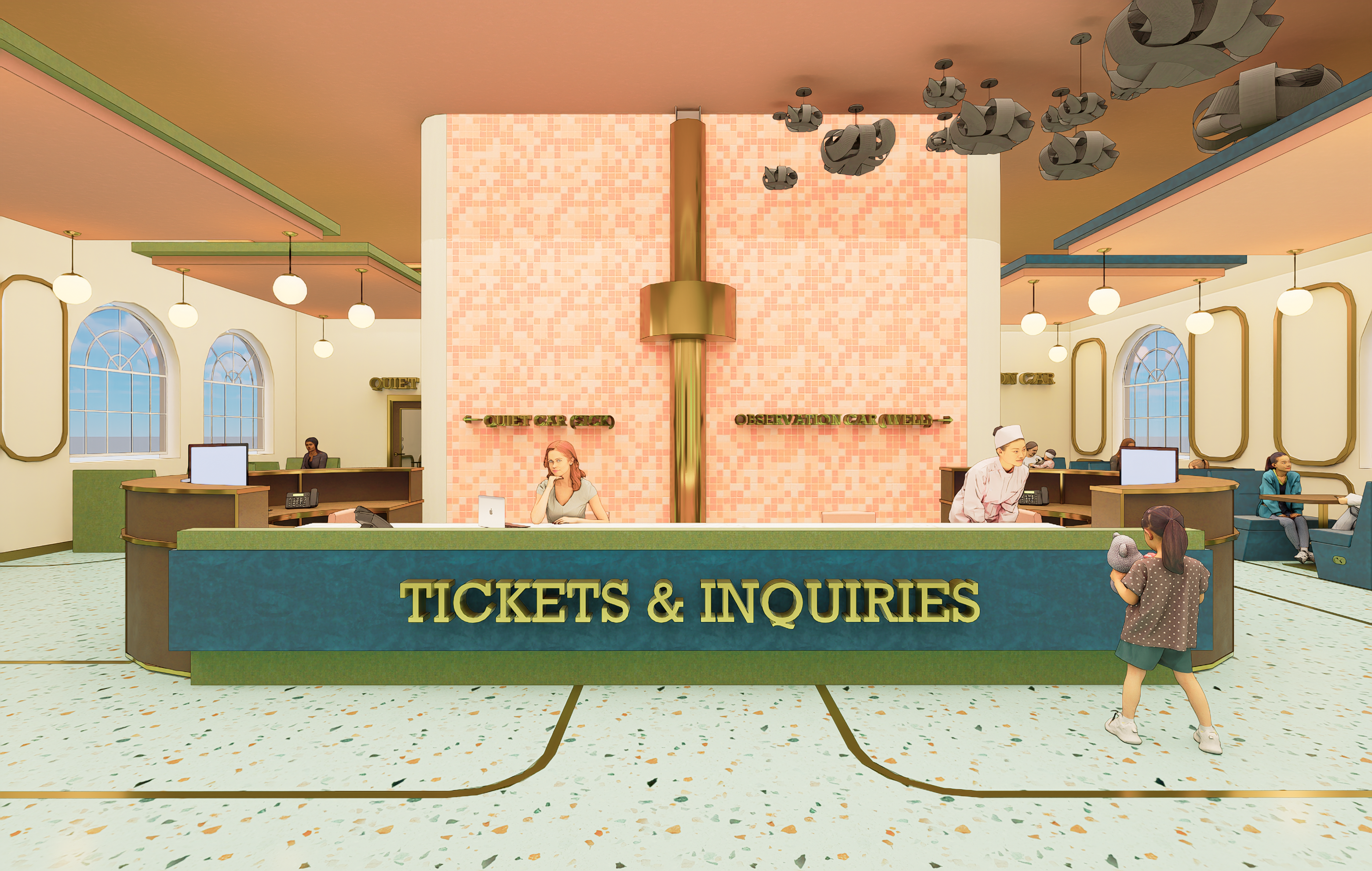
The central reception desk is the clinic's orienting landmark — the "ticket counter" of the train hall metaphor. The teal and gold desk front, backlit terrazzo flooring, arched corridor openings reading "Quiet Car" and "Observation Car," and the ribbon cloud pendants overhead create a spatial moment that is simultaneously wayfinding device and architectural destination. Children approach a counter designed at their scale, with visual cues borrowed from the romance of rail travel rather than the anxiety of a medical facility.
The section reveals the full spatial hierarchy of the reception zone — arched openings frame each waiting bay, the "Tickets & Inquiries" nurse hub anchors the center as the clinic's primary landmark, and the ceiling's layered materials shift from acoustic coffer panels in clinical zones to arched barrel vaults at key arrival moments. The warm terracotta, cream, and sage palette creates a domestic warmth calibrated for pediatric confidence.